Foundations of Artificial Intelligence (FAI) Group
|

|

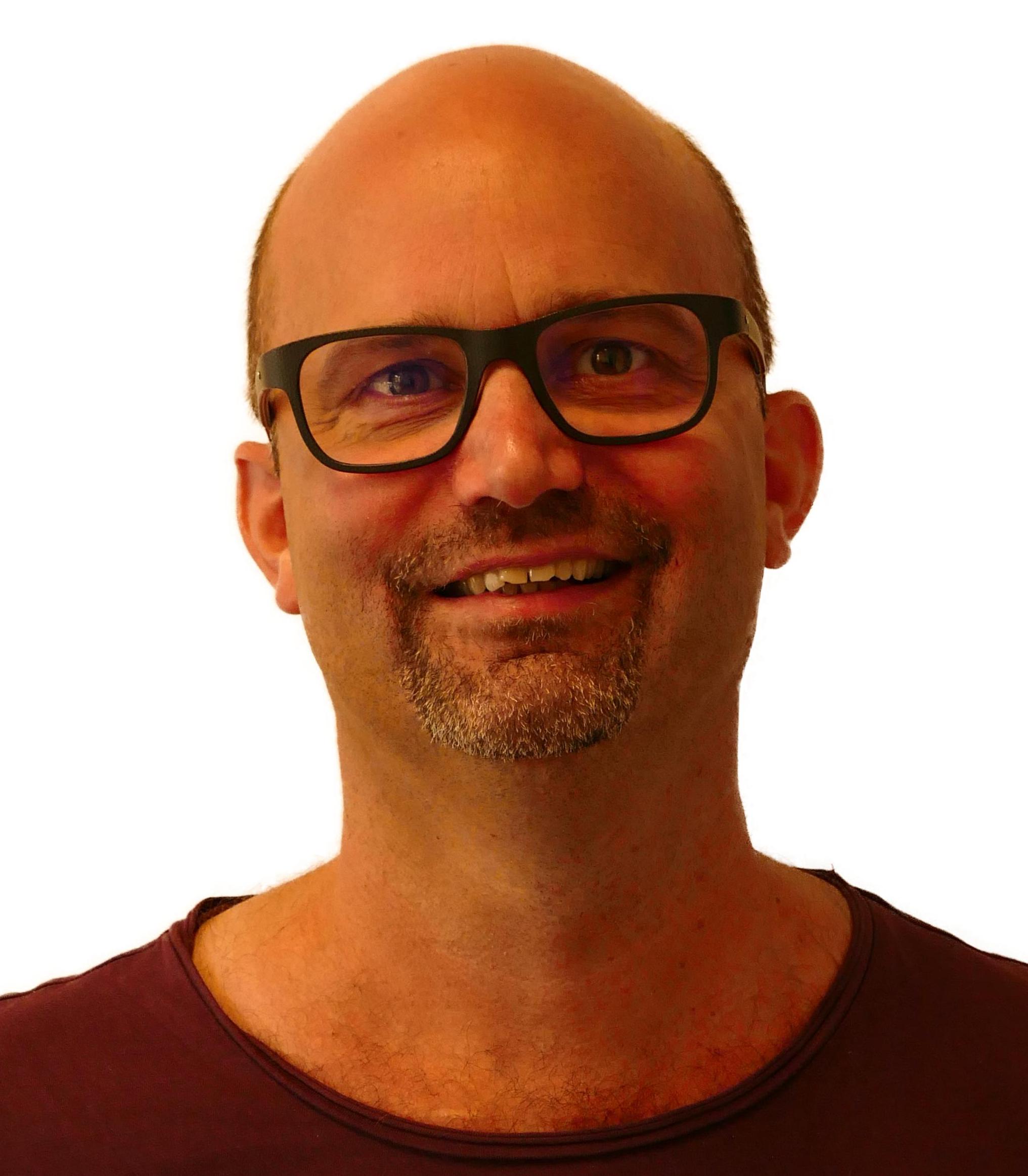
Prof. Dr. Jörg Hoffmann
Saarland University, Foundations of Artificial Intelligence Group
DFKI Affiliate Professor
Saarland Informatics Campus
Building E1 1
66123 Saarbrücken, Germany
-
 (last name) (at) cs (dot) uni-saarland (dot) de
-
 +49 (0) 681 302 71471
 +49 (0) 681 302 57554
-
 Room 3.18
Google Scholar
profile: https://scholar.google.com/citations?user=NR6qg_UAAAAJ&hl=en
DBLP: http://dblp.uni-trier.de/pers/hd/h/Hoffmann_0001:J=ouml=rg
Own publications page: http://fai.cs.uni-saarland.de/hoffmann/publications.html
AI professor
ranking: https://airankings.professor-x.de/
(rank 1 in Core AI venues among German professors)
Research Interests. I'm working on a range of topics relating
to AI action-decision problems, with connections to related areas such
as SAT/CP, verification, and natural language generation. Currently,
my primary interest is in methods to gain trust in learned
action-decision components (action policies). My research group is
exploring methods to explain, verify, test, and visualize the behavior
of such policies.
Short CV. I completed my PhD at the University of Freiburg in
2002, with a thesis that won
the EurAI
Dissertation award 2002. After postdoctoral positions at Max
Planck Institute for Computer Science, Cornell University, the
University of Innsbruck, and at SAP Research, I joined INRIA as a
Directeur de Recherche in 2009. I became a Professor at Saarland
University in 2012, where I'm heading the
Foundations of Artificial Intelligence
Group. I'm an elected Fellow of AAAI and EurAI.
Awards.
- AAMAS'26
Best Student Paper Award (first author Anwesha Das, with Jack
Duff and Vera Demberg).
- ICAPS
2026 Influential Paper Award (with Michael Katz and Carmel
Domshlak).
- Best Paper Award, 26th International Conference on Information
Visualisation (IV'22).
- Oustanding Paper Award, Honorable Mention
at 36th AAAI
Conference on Artificial Intelligence (AAAI'22).
- Best Student Paper Award
at 14th International Symposium on
Combinatorial Search 2021 (SOCS'21).
- Fellow
of EurAI, 2021.
- Fellow of
AAAI, 2021.
- Best Senior Program Committee (SPC) Member Award
at ICAPS'19.
- Distinguished Senior Program Committee (SPC) Member Award
at IJCAI'19.
- Busy Beaver Award for
the Programmierung
2 lecture, as the best summer 18 basic course. Awarded each
teaching term by the Saarland University CS students.
- Best Paper Award at the 25th
International Symposium on Model Checking of Software (SPIN'18).
- Runner-Up in the sequential agile track and in the sequential
bounded-cost track. Both with SaarPlan, at
the 2018 International Planning Competition.
- Outstanding Senior Program Committee (SPC) Member Award
at AAAI'18.
- ICAPS
2017 Influential Paper Award, Honorable Mention (with Ronen
Brafman).
- Runner-Up (best basic, non-portfolio, system) at
the 1st
Unsolvability International Planning Competition (UIPC’16).
- ICAPS
2016 Outstanding Student Paper Award (with Jeanette Daum, Alvaro
Torralba, Patrik Haslum, and Ingo Weber).
- Runner-Up in the sequential satisficing track (best-performing
basic, i.e., non-portfolio, solver); Innovative Planner Award. Both
with Michael Katz, at
the 2014
International Planning Competition.
- Busy Beaver Award for
the Automatic
Planning lecture, as the best winter 13-14 core/advanced
course. Awarded each teaching term by the Saarland University CS
students.
- SOCS
2013 Best PC Member Award.
- ICAPS
2013 Influential Paper Award (with Julie Porteous and Laura
Sebastia).
- ICAPS
2012 Best Paper Award (with Emil Keyder and Patrik Haslum).
- Co-winner
of the optimal track at the 7th International Planning Competition
(IPC'11), with Fast Downward Stone-Soup (1st prize) and
Merge-and-Shrink (2nd prize).
- Nominated for ICAPS 2011 Best Paper Award.
- Chaire d'Excellence project grant by the French Agence Nationale
de Recherche (ANR), selected as one of 15 accepted proposals in a
nationwide call across all scientific disciplines.
- ICAPS
2008 Influential Paper Award, Honorable Mention (with Jana
Koehler, Bernhard Nebel, and Yannis Dimopoulos).
- ICAPS
2007 Best Research Paper Award (with Malte Helmert and Patrik
Haslum).
- Nominated for IJCAI 2007 Best Paper Award (with Carla Gomes,
Ashish Sabharwal, and Bart Selman).
- Co-winner
of the optimal track at the 5th International Planning Competition
(IPC'06), with SATPLAN.
- Nominated for ICAPS 2006 Best Paper Award (with Ashish Sabharwal
and Carmel Domshlak).
- IJCAII-JAIR Best
Paper Prize 2005 (with Bernhard Nebel).
- AAAI 2005 Outstanding PC Member Award.
- ICAPS
2004 Best Paper Award (with Ronen Brafman).
- Wolfgang-Gentner
Nachwuchsfoerderpreis 2003.
- EurAI
Dissertation Award 2002. Award for the best European Dissertation
in the field of AI. Awarded annually by EurAI, the European
Association for Artificial Intelligence.
- Winner of the
fully-automated track at the 2nd International Planning Competition
(IPC'00), with FF.
- Winner
of the ADL track at the 1st International Planning Competition
(IPC'98), with IPP.
Teaching.
Please see the FAI Teaching page.
Systems.
A central activity in my research area is the development of systems,
whose empirical performance serves to evaluate the underlying
ideas. Here 's a list of systems I've been involved in:
- IPP. This
is a planning tool I implemented as a student. It is based on the
Graphplan algorithm and nowadays largely outdated.
- FF. This planning tool was started in my
PhD thesis, and gained fame by outclassing the competition in the 2000
International Planning Competition (IPC), setting a completely new
standard in planner performance. The tool is still widely used today;
variants of its key techniques are used in almost every state of the
art planner. FF has been extended to several expressive variants of
planning, implemented in the tools Metric-FF (numeric state
variables), Conformant-FF (uncertain initial states), Contingent-FF
(partial observability), and Probabilistic-FF (like Conformant-FF but
with probabilistic initial states and action effects).
- SATPLAN. This
planner, originally proposed by Henry Kautz and Bart Selman, compiles
planning into a series of SAT problems. It has long dominated the
track for optimal planning tools at the IPC. My contribution amounted
to implementation works on encoding planning into SAT.
- UPPAAL. This is a very
widely used tool for model checking networks of timed automata. With
co-workers at the Ujniversity of Freiburg, I adapted planning
heuristic functions to this context, and showed that they can be
useful to more effectively find bugs (paths to undesired states) in
the state spaces of such networks.
- TorchLight is a recent tool I
have developed, which allows to analyze search space topology without
actually running any search. The tool applies to planners based on the
"ignoring delete lists" relaxation.
- adl2strips translates input from the
ADL planning language, which allows arbitrary first-order formulas in
operator preconditions and the goal, to the simpler STRIPS language
which restricts these to conjunctions of atoms. The tool also features
two methods for compiling away conditional effects. It has been used
in the 2004 IPC, and in some later editions of the IPC as well.
- Fast
Downward. This planning tool was started in the PhD thesis of
Malte Helmert, and has in the meantime evolved into the main platform
for implementing and evaluating planning algorithms. Fast Downward
implements a great variety of search techniques based on heuristic
search (including those of FF). The FAI group are regular
contributors, devising for example some of the techniques
-- merge-and-shrink abstractions, a method to compute lower
bound heuristic functions to be used for optimal planning -- that were
awarded in the 2011 IPC versions of Fast Downward.
For more detailed information and source code downloads, please see
the FAI group's Software page.
Scientific Organization.
- Head of
the Informatics
Department, and Vice-Dean of
the Faculty
for Mathematics and Informatics, at Saarland University (April
2020 -- March 2022).
- Dean of Studies of
the Faculty
for Mathematics and Informatics, at Saarland University (April
2016 -- March 2018).
- Conference Co-Chair of the 30th International Conference on
Automated Planning and Scheduling (ICAPS'20).
- Member of the Executive Council of
the International
Conference on Automated Planning and Scheduling (ICAPS), 2010 --
2016.
- Program Co-Chair of
the 26th
National Conference of the American Association for Artificial
Intelligence (AAAI'12).
- Conference Co-Chair of
the 20th
International Conference on Automated Planning and Scheduling
(ICAPS'10).
- Journal Track Co-Chair of
the 25th
International Conference on Automated Planning and Scheduling
(ICAPS'15).
- Co-Chair of
the ICAPS
International Summer School on Planning and Scheduling 2018.
- Member of the Advisory Committee of
the 27th International Joint
Conference on Artificial Intelligence (IJCAI'18).
- Sponsorship Co-Chair of ICAPS'14, ICAPS'15, and ICAPS'16.
- Demonstrations Chair of ESWC'08.
- Doctoral Consortium Co-Chair of ICAPS'07.
- Tutorial Chair of KI'07.
- Technical Coordinator of EU-funded STREP SWING: Semantic Web
Service Interoperability for Geospatial Decision Making.
- Co-Chair of the International
Planning Competition 2004.
- Co-Chair of the 5th workshop on Reliable Planning and Learning
(RIPL'26), at ICAPS'26.
- Co-Chair of the 4th workshop on Reliable Planning and Learning
(RIPL'25), at ICAPS'25.
- Steering Committee of the 6th workshop on Explainable
Logic-Based Knowledge Representation (XLoKR 2025), at KR'25.
- Co-Chair of the 5th workshop on Explainable Logic-Based
Knowledge Representation (XLoKR 2024), at KR'24.
- Co-Chair of the 3rd workshop on Reliable Data-Driven Planning
and Scheduling (RDDPS'24), at ICAPS'24.
- Co-Chair of the 4th workshop on Explainable Logic-Based
Knowledge Representation (XLoKR 2023), at KR'23.
- Co-Chair of the 2nd workshop on Reliable Data-Driven Planning
and Scheduling (RDDPS'23), at ICAPS'23.
- Co-Chair of the 6th workshop on Human-Aware and Explainable
Planning (HAXP'23), at ICAPS'23.
- Co-Chair of the 1st workshop on Reliable Data-Driven Planning
and Scheduling (RDDPS'22), at ICAPS'22.
- Co-Chair of the 3rd workshop on Explainable Logic-Based
Knowledge Representation (XLoKR 2022), at KR'22.
- Co-Chair of the 4th Workshop on Explainable Planning
(XAIP'21) at ICAPS'21.
- Co-Chair of the 2nd workshop on Explainable Logic-Based
Knowledge Representation (XLoKR 2021), at KR'21.
- Co-Chair of the 1st workshop on Explainable Logic-Based
Knowledge Representation (XLoKR 2020), at KR'20.
- Co-Chair of the 2nd Workshop on Explainable Planning
(XAIP'19) at ICAPS'19.
- Co-Chair of the 1st Workshop on Understanding and Enhancing
Online Privacy (UEOP'16) at NDSS'16.
- Co-Chair of the 3rd Workshop on Heuristics for
Domain-Independent Planning (HDIP'11) at ICAPS'11.
- Co-Chair of the 2nd Workshop on Heuristics for
Domain-Independent Planning (HDIP'09) at ICAPS'09.
- Co-Chair of the workshop Semantic Web meets Geospatial
Applications at AGILE'08.
- Co-Chair of the workshop Heuristics for Domain-Independent
Planning: Progress, Ideas, Limitations, Challenges (HDIP'07) at
ICAPS'07.
- Co-Chair of the workshop
on the competition at ICAPS'03.
Invited talks.
Co-authors (journal and conference papers).
- Corin Anderson
- Mihai Andrei
- Anupriya
Ankolekar
- Carlos Areces
- Grigori Babitski
- Michael
Backes
- Tim Bauerschmidt
- Alistair
Barros
- Gerd Behrmann
- Fabian
Bendun
- Arne
Berre
- Julian
Bitterwolf
- Stefan Borgwardt
- Blai Bonet
- Matthias Born
- Olivier Buffet
- Facundo Bustos
- Simon Bergweiler
- Piergiorgio Bertoli
- Ronen Brafman
- Martim Brandao
- Michael Brenner
- Dunbo Cai
- Lorenzo
Cascioli
- Michael Cashmore
- Ernie
Chang
- Maria Christakis
- Amanda
Coles
- Andrew
Coles
- Luis Costa
- Anwesha
Das
- Jeanette Daum
- Jesse Davis
- Vera Demberg
- Laurens
Devos
- Henning Dierks
- Yannis Dimopoulos
- Martin Dominguez
- Carmel Domshlak
- Klaus Draeger
- Patrick Dubbert
- Philippe Duchesne
- Jack Duff
- Stefan Edelkamp
- R. Eifler
- Roman Englert
- Hasan Ferit Eniser
- Rasha
Faqeh
- Nazim Fates
- Chris Fawcett
- Ivan Fedotov
- Dieter Fensel
- Patrick
Ferber
- Alan Fern
- Christoph
Fetzer
- Maximilian Fickert
- Bernd Finkbeiner
- Daniel Fišer
- Daniel Fitzner
- Marco
Foschini
- Maria Fox
- Jeremy Frank
- Ivan Gavran
- Hector Geffner
- Florian
Geißer
- Alfonso Gerevini
- Daniel Gnad
- Carla Gomes
- Guido Governatori
- Timo Gros
- David
Gross
- Miha Grzar
- Tianyi Gu
- Stefan
Gumhold
- Tias Guns
- Mingyu
Hao
- Patrik Haslum
- Philippe Heim
- M. Hein
- Daniel Heller
- Malte Helmert
- Martin Hepp
- Holger
Hermanns
- Stijn Heymans
- Anke
Hirsch
- Nils Hodel
- Daniel
Höller
- Holger Hoos
- David Howcroft
- Frank
Hutter
- Anastasia Isychev
- Chaahat Jain
- Matthäus Jany
- Tomasz
Kaczmarek
- Julius Kamp
- Erez Karpas
- Michael Katz
- Henry Kautz
- Emil Keyder
- Peter Kissmann
- Dietrich
Klakow
- Michaela
Klauck
- Eva Klien
-
Thorsten
Klößner
- Nina Knieriemen
- Maximilian
Köhl
- Jana Koehler
- Arne Köhn
- Alexander
Koller
- Yugesh Kothari
- Alisa Kovtunova
- Marek Kowalkiewicz
- Frank
Michael Kraft
- Michal Krajnansky
- Markus Krötzsch
- Antonio
Krüger
- Robert
Kuennemann
- Sebastian Kupferschmid
- Felix Maurice Kuntz
- Joel Langlois
- Kim G. Larsen
- Pascal Lauer
- Freddy Lecue
- Kevin Leyton-Brown
- Andreas Limyr
- Frederico Liporace
- Alberto Lluch Lafuente
- Jianlin Li
- Derek Long
- Daniele Magazzeni
- Rupak Majumdar
Jayanta Mandi
- Annapaola Marconi
- Ivan Markovic
- Ninja
Marnau
- Patrick
Maue
- Norman May
- Hendrik Meerkamp
- Jan Mendling
- Joshua
Meyer
- Andrew Mitchell
- Martin
Mueller
- Nicola
Müller
- Hootan
Nakhost
- Jorge A Navas
- Bernhard Nebel
- Raz Nissim
- Joerg
Nitzsche
- Moritz Oster
- Hector Palacios
- Giancarlo
Pellegrino
- M. Petrik
- Joshua Phillips
- Marco Pistore
- Andreas Podelski
- Valerie Poser
- Julie Porteous
- Victor Scherer
Putrich
- Thorsten Rauber
- Jussi Rintanen
- Frank Rittinger
- Wheeler Ruml
- Andrey Rybalchenko
- Ashish Sabharwal
- Carlos
Sarraute
- Frederik Schmitt
- Daniel Schoen
- James
Scicluna
- Laura Sebastia
- Valentin
Seimetz
- Bart Selman
- Ivan Serina
- Ben Sievers
- Siddhant Sharma
- Daniel Sherbakov
- Alexander
Shleyfman
- Milivoj
Simeonovski
- Adina Sirbu
- Jan-Georg Smaus
- Patrick
Speicher
- Christoph Stasch
- Leonhard Staut
- Michael Stollberg
- Sven Schade
- Christine Schäfer
- Lukas Schmitz
- Maximilian
Schwenger
- Guy Shani
- Dorin Shmaryahu
- Aleena Siji
- Adish
Singla
- David Smith
- Fabian Spaniol
- Katharina Stein
- Marcel
Steinmetz
- Nathalie Steinmetz
- Francois Tertre
- Sylvie Thiebaux
- Alvaro Torralba
- Felipe Trevizan
- Sebastian
Trueg
- Isabel
Valera
- Mauro Vallati
- Laurentiu
Vasiliu
- Marcel Vinzent
- Alexander Walkowski
- Ingo Weber
- Martin Wehrle
- Christoph
Weidenbach
- Daniel
Weld
- Julia
Wichlacz
- Frederik
Wiehr
- Verena
Wolf
- Valentin Wüustholz
- Raluca
Zaharia
- Nicolas Zastavni
- Xuan Zhou
Uh yes, I also have hobbies.
Here's the glorious web page of my
(ex-)band The
Inglorious Mustard Boys ...